Saeco offers a diverse range of automatic espresso machines, supported by readily available manuals and resources for optimal brewing experiences.
Philips and Saeco provide downloadable user manuals, quick start guides, and parts lists for various models like GranAroma and Minuto.
The Saeco Adapting System ensures consistent quality, adjusting to bean characteristics, while ChatGPT aids in understanding machine functionalities.
What is a Saeco Espresso Machine?
Saeco espresso machines are fully automatic coffee centers designed for home use, simplifying the process of creating café-quality beverages. These machines, like the GranAroma and Minuto series, utilize integrated grinders and brewing units to transform whole beans into rich espresso.
Accessing the appropriate user manual is crucial for understanding your specific model’s features and operation. Philips, the parent company, provides downloadable manuals in PDF format, covering everything from initial setup to advanced customization. The Saeco Adapting System intelligently adjusts brewing parameters based on bean type, ensuring optimal flavor extraction, as detailed within these guides.
Brief History of Saeco
Saeco originated in Italy in 1985, quickly becoming renowned for its innovative, fully automatic espresso machines. Initially focused on office coffee solutions, Saeco expanded into the home market, pioneering user-friendly designs.
Throughout its history, Saeco has prioritized ease of use and consistent quality, reflected in the detailed instructions found within each user manual. Acquired by Philips in 2009, the brand continues to evolve, offering models like the GranAroma, while maintaining a commitment to accessible brewing, supported by readily available documentation.
Understanding Your Saeco Machine
Saeco machines feature adaptable systems, requiring familiarization with components detailed in the user manual for optimal performance and customization.
Exploring the manual unlocks features like adjustable strength and volume, enhancing your brewing experience with Saeco technology.
Key Components of a Saeco Espresso Machine
Understanding the core components, as detailed in your Saeco espresso machine manual, is crucial for operation and maintenance. Key elements include the bean hopper, responsible for holding whole coffee beans, and the integrated grinder, which adjusts to your preferred coarseness.
The brew group is where the magic happens, extracting flavor from the grounds. A water reservoir provides the necessary liquid, often with a built-in filter for purity. Finally, the display panel, often featuring a color screen on models like the Cristallo Evo 400, allows for customization and displays important information.
Types of Saeco Espresso Machines (Classico, Intelia, GranAroma, Minuto)
Saeco offers a range of machines, each detailed in its specific manual. The Classico provides a traditional espresso experience. Intelia models emphasize easy customization and cleaning, as highlighted in their documentation. GranAroma machines, like the SM6585, boast advanced features and bean recognition.
The compact Minuto series, such as the HD8762/19, prioritizes simplicity and speed. Refer to your machine’s user manual for detailed instructions and troubleshooting specific to your Saeco model, ensuring optimal performance and longevity.
Setting Up Your Saeco Machine
User manuals guide initial setup, covering water reservoir filling, filter installation, and bean hopper loading for optimal performance.
Adjust grind settings according to your manual for desired coffee strength, ensuring a perfect first brew.
Initial Setup and First Use
Before your first brew, carefully consult the Saeco espresso machine manual for model-specific instructions. Begin by removing all packaging materials and ensuring the machine is placed on a stable, level surface.
Thoroughly rinse the water reservoir and brew group as detailed in the manual. Fill the reservoir with fresh, filtered water. Prime the system by running several cycles without coffee grounds, following the manual’s guidance to eliminate any residual manufacturing dust or air bubbles.
Load the bean hopper with your preferred coffee beans, and select a medium grind setting initially. The manual will provide detailed instructions on adjusting grind settings for optimal extraction.
Water Reservoir and Filter
Saeco espresso machine manuals emphasize the importance of using fresh, filtered water for optimal taste and machine longevity. Regularly check the water reservoir level and refill as needed, avoiding overfilling.
Many Saeco models utilize a water filter, typically a Brita filter, to reduce limescale buildup and improve water quality. The manual details filter replacement frequency, usually every two months, depending on water hardness.
Properly installing and maintaining the water filter, as outlined in your machine’s manual, is crucial for preventing scale and ensuring consistently delicious espresso.
Bean Hopper and Grind Settings
Saeco espresso machine manuals detail how to fill the bean hopper with whole coffee beans, advising against pre-ground coffee for best results. The hopper capacity varies by model, so consult your specific manual.
Adjusting the grind settings is vital for proper espresso extraction. Finer grinds are for stronger coffee, while coarser grinds are for weaker brews. Your manual will guide you through these adjustments.
The Saeco Adapting System considers bean characteristics, but manual fine-tuning, as described in the manual, is often needed to achieve your preferred taste.
Brewing Espresso
Saeco manuals explain the espresso extraction process, emphasizing adjusting coffee strength and volume for personalized drinks like mochas, lattes, and cappuccinos.
Follow your manual for optimal brewing, considering bean type and grind settings to achieve desired flavor profiles.
Espresso Extraction Process
Saeco espresso machines automate the brewing process, but understanding the fundamentals, as detailed in your manual, is crucial. The machine grinds beans, tamps the grounds, and forces hot water through them under high pressure.
Refer to your user manual for specific instructions on adjusting grind size and water temperature, impacting extraction quality. Proper extraction yields a rich, flavorful espresso with a crema layer. The Saeco Adapting System further refines this process, adapting to bean characteristics for consistent results.
Always consult the manual for model-specific guidance on optimal extraction parameters.
Adjusting Coffee Strength and Volume
Your Saeco espresso machine’s manual details how to customize your brew. Strength is typically adjusted by altering the coffee bean quantity or grind fineness – finer grinds yield stronger coffee. Volume control allows you to select the amount of espresso dispensed, from a short ristretto to a longer lungo.
Philips Saeco machines, like the Intelia, offer easy customization. Consult your user manual for specific button combinations or menu options to modify these settings. Experiment to find your preferred balance of strength and volume.
Remember to save your preferences!
Making Different Coffee Drinks (Mocha, Latte, Cappuccino)
Your Saeco espresso machine manual will guide you through creating specialty drinks. For a mocha, the instructions detail adding chocolate syrup or powder to the espresso before steaming milk. Lattes and cappuccinos require frothing milk – your machine may have an integrated milk frother or steam wand.
Specific recipes, like a 16oz mocha, are often included in supplemental documents. Refer to your model’s user manual for precise milk-to-espresso ratios and frothing techniques to achieve café-quality results.
Practice makes perfect!
Cleaning and Maintenance
Saeco manuals emphasize daily cleaning, descaling, and brew group maintenance for optimal performance. Regular upkeep ensures longevity and consistent espresso quality.
Follow your user manual for specific instructions and recommended cleaning frequencies to prevent buildup and maintain hygiene.
Daily Cleaning Procedures
Saeco manuals consistently highlight the importance of daily cleaning for maintaining optimal espresso quality and machine longevity. After each use, promptly empty the drip tray and coffee grounds container.
Rinse these components thoroughly with warm water. Wipe down the exterior of the machine with a damp cloth. The brew group, if removable (refer to your specific model’s user manual), should also be rinsed to remove coffee residue.
Regularly cleaning these parts prevents buildup and ensures consistently delicious coffee. Ignoring these steps can lead to decreased performance and potential malfunctions.
Descaling Your Saeco Machine
Saeco manuals emphasize descaling as a crucial maintenance task, typically every 2-3 months, depending on water hardness. Descaling removes mineral buildup that can affect performance and coffee taste.
Use a commercially available descaling solution specifically designed for coffee machines, following the instructions in your user manual. The process usually involves running the solution through the machine, followed by several rinsing cycles with fresh water.
Regular descaling ensures optimal brewing temperature and prevents damage to internal components, extending the life of your Saeco espresso machine.
Brew Group Cleaning
Saeco manuals detail the importance of regular brew group cleaning to remove coffee oils and residue. This impacts coffee flavor and machine performance. The brew group is the heart of espresso extraction.
Typically, the brew group can be removed for cleaning. Rinse it thoroughly under running water, and use a soft brush to remove any stubborn residue. Some models have an automatic cleaning cycle – consult your user manual.
Consistent cleaning prevents clogging and ensures optimal espresso quality, maintaining the longevity of your Saeco machine.
Troubleshooting Common Issues
Saeco manuals offer solutions for issues like machines not turning on, coffee not brewing, or grinder problems, ensuring smooth operation.
Decoding error codes, as detailed in the user manual, helps resolve malfunctions quickly and efficiently, minimizing downtime.
Machine Not Turning On
If your Saeco espresso machine fails to power on, consult the user manual for specific troubleshooting steps. First, verify the power cord is securely connected to both the machine and a functioning electrical outlet.
Check the main power switch, if applicable, and ensure it’s in the ‘on’ position. Some models feature an energy-saving mode; pressing the power button may reactivate it.
Review the manual for fuse information, as a blown fuse can prevent operation. If these steps don’t resolve the issue, further diagnostics or contacting Saeco support may be necessary.
Coffee Not Brewing
If your Saeco isn’t brewing, the user manual is your first resource. Ensure the water reservoir is filled to the appropriate level and correctly inserted. Verify the bean hopper contains sufficient beans and the grind setting isn’t too coarse.
A clogged brew group is a common cause; the manual details cleaning procedures. Check for error messages on the display, referencing the manual’s decoding section.
Descaling may be needed if mineral buildup obstructs water flow. Confirm the machine has completed its automatic rinsing cycle before brewing.
Grinder Issues
If your Saeco’s grinder isn’t functioning, consult the user manual for troubleshooting steps. Foreign objects like small stones can obstruct the grinding process; inspect the bean hopper. Adjusting the grind setting—detailed in the manual—can resolve inconsistent grinding.
Ensure beans are dry; damp beans cause clumping. A jammed grinder may require manual intervention, as outlined in the manual’s maintenance section.
Consistent bean quality impacts grinder performance; use fresh, properly stored beans. If issues persist, a professional repair might be necessary.
Advanced Features & Customization
Saeco’s manuals detail the Adapting System, which learns user preferences, and customization options like adjustable coffee strength and volume for personalized brewing.
User profiles allow saving individual settings, enhancing the experience.
Saeco Adapting System
Saeco’s innovative Adapting System, thoroughly explained in the user manual, intelligently adjusts brewing parameters to compensate for variations in coffee beans.
This system recognizes changes in bean origin, blend, and roast, automatically modifying grind settings, brewing temperature, and coffee volume to consistently deliver optimal espresso.
The manual emphasizes that coffee is a natural product, and this feature ensures a high-quality cup regardless of the beans used, simplifying the process for users and maximizing flavor extraction.
User Profiles and Customization Options
Saeco espresso machines, detailed in their respective manuals, often feature user profiles allowing personalized coffee preferences to be saved.
These profiles enable multiple users to store individual settings for coffee strength, volume, and temperature, ensuring a tailored experience for everyone.
The manual guides users through creating and managing these profiles, alongside other customization options like aroma intensity and milk frothing levels, for a truly bespoke beverage.
Parts and Accessories
Saeco machine manuals detail component identification and replacement, with parts lists available online for models like the Aroma series.
Accessory sourcing information is often included, ensuring users can maintain and optimize their espresso experience.
Identifying Common Replacement Parts
Saeco espresso machine manuals frequently include exploded diagrams illustrating component locations, aiding in identifying necessary replacements. Common parts needing occasional attention include the brew group, often requiring periodic cleaning or full replacement for optimal extraction.
The water reservoir and its filter are also frequent replacement items, ensuring water purity and preventing scale buildup. Additionally, the grinder burrs wear over time, impacting coffee quality and necessitating eventual replacement. Seals and hoses can also degrade, leading to leaks, and are easily identified within the manual’s parts list.
Where to Purchase Saeco Parts
Saeco parts can be sourced from various online retailers specializing in espresso machine components. Philips’ official website often provides a direct link to purchase genuine Saeco replacement parts, ensuring compatibility and quality.
Third-party retailers like Seattle Coffee Gear also stock a wide array of Saeco parts, offering competitive pricing and convenient ordering. Consulting your machine’s manual can help pinpoint part numbers for accurate searches, streamlining the purchasing process and guaranteeing the correct fit.
Safety Precautions
Always follow the instructions in your Saeco machine’s manual regarding electrical safety and proper operation to prevent hazards.
Ensure the machine is grounded and avoid water exposure to electrical components for safe usage and longevity.
Important Safety Instructions
Carefully read the entire Saeco espresso machine manual before operating the appliance; it contains crucial safety information for proper use.
Always ensure the voltage indicated on the machine corresponds to your household supply to avoid electrical shock or damage.
Never immerse the appliance, cord, or plug in water or any other liquid; cleaning should be done with a damp cloth.
Do not operate the machine with a damaged cord or plug, and if it malfunctions, disconnect it immediately and seek service.
Keep the appliance out of reach of children and supervise its use near them to prevent accidents or injuries.
Electrical Safety
Refer to your Saeco espresso machine manual for specific electrical requirements and grounding instructions to ensure safe operation.
Always unplug the machine from the power outlet before cleaning, performing maintenance, or when not in use for extended periods.
Avoid using extension cords, as they may not be adequately rated for the machine’s power consumption and pose a fire hazard.
Do not operate the machine if the power cord or plug is damaged; replace it immediately with a genuine Saeco replacement.
Ensure the electrical outlet is properly grounded to prevent electrical shock and maintain the machine’s safety features.
User Manual Resources
Saeco and Philips offer downloadable manuals, guides, and FAQs online for various models, aiding users in understanding their espresso machine’s features.
Locate your specific model’s manual on the Philips website for detailed instructions and troubleshooting assistance.
Finding Your Specific Model’s Manual
Locating the correct user manual for your Saeco espresso machine is crucial for optimal performance and troubleshooting. Begin by visiting the official Philips website, as Philips owns Saeco and hosts the majority of their documentation.
Utilize the search function, entering your specific model number – often found on a label on the machine itself. Philips provides downloadable PDF versions of user manuals, quick start guides, and even parts lists.
Alternatively, explore online resources like Seattle Coffee Gear, which may also host manuals for popular Saeco models like the Espresso Classico.
Online Support and FAQs
Beyond downloadable manuals, Philips and Saeco offer extensive online support resources. The official Philips website features frequently asked questions (FAQs) addressing common issues and providing troubleshooting guidance for Saeco espresso machines.
These FAQs cover topics ranging from initial setup to cleaning procedures and error code resolutions. Furthermore, online communities and forums dedicated to Saeco machines can provide peer-to-peer support and solutions.
ChatGPT, with its natural language processing capabilities, can also assist in interpreting manual information and answering specific questions.
Understanding Error Codes
Saeco espresso machine manuals detail specific error codes, aiding in diagnosis. These codes signal issues requiring attention, from grinder problems to descaling needs.
Resolving these codes often involves consulting the manual or Philips’ online FAQs for targeted troubleshooting steps.
Decoding Common Saeco Error Messages
Saeco espresso machine manuals are crucial for deciphering error messages; Common codes, like those indicating a blocked brew group or requiring descaling, are explained in detail.
For instance, a “Calc Cleaning” message prompts descaling, while grinder-related errors suggest bean issues or mechanical faults. The manual provides step-by-step solutions;
Philips’ support resources and online FAQs supplement the manual, offering further clarification and troubleshooting guidance for each specific error encountered.
Understanding these messages prevents damage and ensures optimal machine performance.
Resolving Error Code Issues
Saeco espresso machine manuals provide targeted solutions for each error code. Often, simple fixes like restarting the machine or checking the water reservoir resolve minor issues.
For more complex codes, the manual guides users through descaling procedures, brew group cleaning, or grinder adjustments. Philips’ online support expands on these instructions.
If an error persists, referencing the manual’s troubleshooting section and FAQs can pinpoint the problem. Seeking professional repair is advised for unresolved issues.
Always prioritize safety and disconnect the machine before attempting repairs.
Warranty Information
Saeco offers warranty coverage details within the product manual, outlining claim procedures and covered components for peace of mind.
Review your manual for specific terms, duration, and how to initiate a warranty claim with Philips for eligible repairs.
Saeco Warranty Coverage
Saeco espresso machine warranties typically cover defects in materials and workmanship for a specified period, often one or two years from the original purchase date, as detailed in your product manual.
This coverage generally includes repair or replacement of defective parts, but excludes damage caused by misuse, improper maintenance (like failing to descale), or unauthorized repairs. Always consult your specific manual for precise terms.
Philips, as the parent company, handles warranty claims; the manual will provide instructions on how to contact them and the documentation required to initiate the process. Proof of purchase is essential.
How to Claim Warranty
To initiate a warranty claim for your Saeco espresso machine, first consult your product manual for specific instructions and contact information for Philips customer support.
You’ll generally need to provide proof of purchase (receipt or invoice), a detailed description of the issue, and potentially photos or videos demonstrating the defect.
The manual outlines the process for returning the machine or arranging for authorized service. Be prepared to cover shipping costs initially, as reimbursement may depend on the claim’s outcome.
Tips for Optimal Espresso
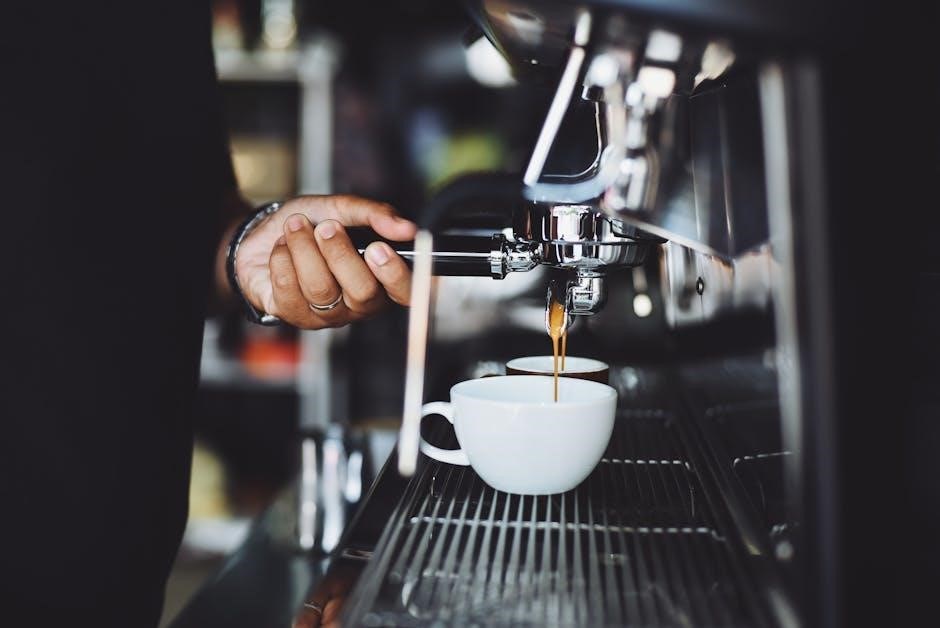
Saeco manuals emphasize using quality beans and understanding the Adapting System for consistent results; proper bean selection is key!
Refer to your manual for guidance on grind settings and achieving the perfect extraction for your preferred coffee profile.
Choosing the Right Coffee Beans
Saeco espresso machine manuals consistently highlight the crucial role of coffee bean quality in achieving optimal espresso. As coffee is a natural product, its origin, blend, and roast significantly impact the final brew.
Experiment with different bean varieties – Arabica, Robusta, or blends – to discover your preferred flavor profile. Freshly roasted beans, used soon after roasting, deliver the best aroma and taste. The Saeco Adapting System can compensate for variations, but quality beans are foundational.
Consider the grind size recommended in your manual for your chosen beans, as this impacts extraction.
Proper Tamping Techniques
While many Saeco machines feature automatic tamping, understanding the principle is beneficial. Though not directly detailed in all manuals due to automation, consistent pressure is key for even extraction.
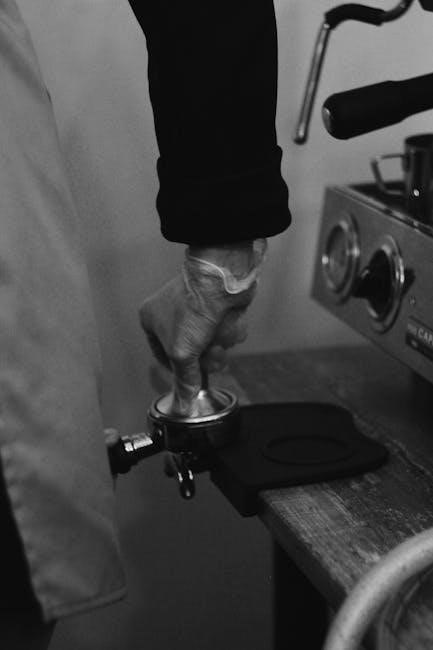
If your model allows manual control, aim for approximately 30 pounds of pressure. Ensure a level tamp to avoid channeling, where water finds the path of least resistance.
A consistent tamp ensures the coffee puck is uniformly dense, leading to balanced flavor. Refer to your specific Saeco model’s manual for guidance on optimal settings.
Cristallo Evo 400 Specifics
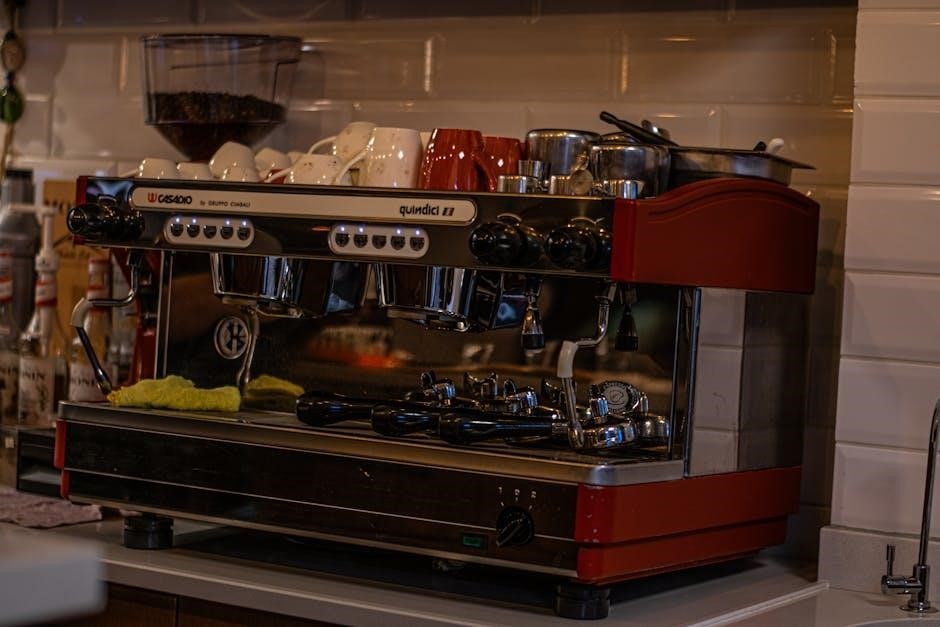
Cristallo Evo 400 boasts a new aluminum design and color display, with upgraded features detailed in its dedicated Saeco user manual.
Design and Features of Cristallo Evo 400
The Cristallo Evo 400 distinguishes itself with a modern aesthetic, incorporating elegant aluminum inlays that elevate its overall appearance. A vibrant color display provides intuitive control and clear feedback during operation. This machine isn’t just about looks; it’s packed with upgraded features designed for convenience and quality.
Referencing the Saeco user manual is crucial to fully understand and utilize these enhancements. The manual details how to navigate the display, customize settings, and maintain optimal performance. It’s a key resource for unlocking the full potential of this sophisticated espresso machine.
Unique Functionality of Cristallo Evo 400
The Cristallo Evo 400 boasts specialized functionality, offering a streamlined experience for coffee enthusiasts. Its advanced features, detailed within the Saeco user manual, allow for personalized beverage creation. The machine’s intuitive interface simplifies adjustments to coffee strength and volume, ensuring a perfect cup every time.
Understanding the manual is essential to leverage the machine’s capabilities, including accessing troubleshooting guides and maintenance schedules. This ensures longevity and consistent performance, maximizing the enjoyment of your Cristallo Evo 400.